In Sacramento, New Presiding Judge Confronts ‘Crisis’

“Keeping the doors open will be a major accomplishment in and of itself,” says the incoming presiding judge of the Sacramento Superior Court in an interview with The Courthouse News. The story notes that Judge Robert Hight says he feels he hopes “… to make good use of hard times [because] a good crisis is always the best place to make major changes.”
“The biggest challenge is clearly budget and how can we provide a level of services the public deserves given the budget that we have,” Hight told the CN. Along with the judges comments, the story offers a good brief history of several court trends, dating back to the days of the initial round of case management system backlogs, circa 2007.
 

Petty Politics Detailed In Former Chief Justice’s Book

Wow – think you understand just how petty California budget politics can get? You might decide you’ve been underestimating after reading a new book from former California Chief Justice Ronald M. George, who retired from the bench in 2011. The way-way-former Los Angeles Municipal Court Judge has released an 800-page volume as part of the court’s oral history project and outlines just how personal funding could become.
 
The Los Angeles Times online is reporting that “… George said legislators sometimes opposed court bills out of anger at rulings. The state high court’s 2008 decision in favor of gay marriage caused Republicans to abandon a court bill they had previously supported.” He said other lawmakers would not support funding because of divorce bitterness and “… one legislator refused to support a revenue bond for court construction because his wife had received what he viewed as an excessive fine for making a rolling stop, George recalled. The bond depended on raising fines.”
 
For anyone hoping to understand the court-legislative relationship, the book is shaping up as a must-read. For the thousands of laid-off court workers, it is bound to illustrate just how little the judicial system, and indeed individual lives, can mean to some lawmakers. Read the L.A. Times piece by Maura Dolan here.

‘Routine’ Bay Area Court Decision Taking Years

It sounds fairly routine: A town’s government thinks development is good for an area, but environmentalists and others say officials have not demanded the kinds of research required by law. So you go to court for a decision, and how long should that take? In the Bay Area community of Newark, they are at three years – and counting.
 
At issue is a non-developed area of the town that many want to preserve. After taking several years to develop a master plan, and gain official support, developers found themselves facing a lawsuit in 2010. A Contra Costa Times newspaper report says that “… the lawsuit has meandered through the courts for the past three years, with all parties still waiting for a definitive ruling. A case management conference involving a judge and the attorneys for both sides is scheduled Nov. 12.”

It has become a case study in the courts’ role in such controversies, with added significance in an area of civil court delays and cutbacks. Read more about it here.

San Bernardino Lawyers Brace For Their ‘Reorganization’

 
The next wave of Superior Court reorganization is slated for San Bernardino early next year, and lawyers there are not happy about the changes, according to The Sun newspaper. The Sun reported that “… attorneys spoke to executive staff at the San Bernardino County Superior Court last week about alternatives to a planned reorganization that will have some people traveling farther distances for court cases.
 
Lawyers involved in the meeting told the newspaper that suggestions of cost savings and other ideas were not going to change the situation. The presiding judge of the county’s Superior Court announced in October that significant changes would occur next year during the 2014 realignment, which would include moving countywide civil cases to the new San Bernardino Justice Center.
 
See the story here.  

Courts Contracts Info Denied To Reform Judge

It’s an ongoing issue, but you might think that getting copies of all the current vendor contracts for California courts would be (A) a cure for insomnia and (B) fairly easy. Think again. Because “A” may be true but “B” is proving difficult for a judge who has been critical of the judicial administration, reports the Voice of San Diego website, a non-profit investigative news outlet.
 
The VofSD reports that “… Kevin McCormick, a trial judge in Sacramento who also heads a court reform-advocacy group called the Alliance of California Judges, asked state court administrators earlier this year for copies of all their current contracts with vendors. He was surprised to hear that they did not have that information available… the courts had literally interpreted [open records act] Rule 10.500 to mean that they did not have to “create” a public record of their contracts — even at the request of a judge.”
 
Judge McCormick went on to question how such a large system runs without a list of vendor contracts. You can read more about the issue here.

Judges Might Hear Cases Of Political Donors

A California Supreme Court ethics committee is seeking comments on a draft opinion that would allow state judges to hear cases of lawyers whose firms have donated to the judge’s campaigns, just so long as no single attorney trying that specific case has given more than $1,500. Judges would have to disclose the contribution, but could still hear the case.
 
The Metropolitan News is reporting details that “… the issue involves the interpretation of Code of Civil Procedure Sec. 170.1(a)(9)(a), which mandates judicial disqualification when a “lawyer in the proceeding” has donated more than $1,500 to the judge’s campaign. The draft opinion would clarify that the statute does not apply to contributions by a firm, and does not provide for aggregation of smaller contributions by individual lawyer.”
 
The deadline for comment on either opinion is Nov. 15,  and comments may be submitted at the site, or by email, or by regular mail. The draft opinions and invitation to comment are posted on the committee’s website here. The full MetNews story is here.

‘Gold Rush’ On For Court Technologies

California may not have enough money to keep community courthouses open, but it has plenty for the next wave of tech upgrades in the wake of that half-billion-dollar failure Court Case Management System failure. In fact, Maria Dinezo at the Courthouse News Service writes that “… a new gold rush has come to California, with the state’s massive legal system open for mining as courts and lawyers move to new technology.”
 
The report notes that gold rushers “… are scrambling for a mother lode of multimillion-dollar contracts for software and licensing, vast additional sums for upkeep, and the right to set up a toll booth on Court Road for 38 million people.” Some clear winners are identified, as “… a group of judges, tech staff and administrators wrote a model contract and selected three top bidders: New Mexico-based Justice Systems Inc., Texas-based Tyler Technologies and Pennsylvania-based LT-Tech owned by Thompson Reuters formerly West Publishing.”
 
Included in the model contract: The right to charge lawyers a fee for every document electronically filed, perhaps around $5. Dinezo does some math: “In one big Southern California court, for example, about 750,000 documents are projected to be filed this year. That’s in Orange County’s civil section alone. Multiplied by a $5 fee, the flow of money would amount to $3 million a year. Extrapolating based on population, total income from the per-document fees could easily rise to $40 million a year throughout the state, paid by California’s lawyers.”
 
And that’s just for civil litigation and does not include separate fees for stuff like installation and upkeep. Follow more of the money here.

Debate Continues On Civil Jury Access, Reductions

 
Money is one resource that forces justice rationing, but jury time is another. When Gov. Brown recently vetoed a jury overhaul bill, the focus was rightly on the issue of allowing non-citizens to serve on the panels. Less reported were issues that would reduce the jury size in some criminal cases and virtually all civil trials.
 
The Sacramento Bee had a recent editorial calling for jury reform and offering some numbers. Says the newspaper: “Statewide approximately 10 million jurors are summoned for service, but only 4 million of those are available and qualified for the task. And even fewer, 1.5 million prospective jurors, actually report to courts. Courts struggle to find sufficient numbers of jurors to serve and the cost of jury service to the courts and to those who serve has become a real strain.” 
 
In a reform idea supported by the Bee, “… in all civil cases, the number of jurors would be reduced from 12 to eight… it’s estimated that the changes proposed would save beleaguered California courts an estimated $5.1 million annually in direct costs. Community costs, which include the loss of productivity, wages and business activity, would be reduced by approximately $174 million annually.”
 
But the idea is not really to save money. The fact is that “jury time” is a resource that’s in short supply, and the battle for access mirrors the sorts of decisions forced by the lack of funding. Read the newspaper’s opinion, and other California editorials gathered by the Associated Press, here

Top Clerk Says Cuts May Hinder Cost-Saving Efforts

Ironically, recent budget-cutting staff reductions may actually hinder efforts to save money by shifting to e-filing or other programs, according to Contra Costa Presiding Judge Barry Goods. In a story announcing a new head clerk, Judge Good noted that “… given our limited resources, and the uncertainty of next year’s budget situation, it’s a question of balancing the expense of e-filing versus other expenses.”
 
Judge Goode was quoted in The Courthouse News coverage of Stephen Nash, who was finance director for the Administrative Office of the Courts for four years and is headed back to the Bay Area to become head administrator for the Contra Costa Superior Court.
 
The report also noted that an upcoming decision on court reserve funds will likely impact how the justice system is operated. Programs like e-filing are going to fall by the wayside, says Judge Goode, if reserves cannot be counted on to help pay costs. Read the Courthouse News report here.

Chief Justice: We’re Basically Denying Justice

 
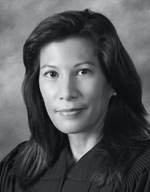
Chief Justice Tani Cantil-Sakauye (Photo: California Courts)

Chief Justice Tani Cantil-Sakauye (Photo: California Courts)

California Chief Justice Tani Cantil-Sakauye continues to make the kind of statements you just know have to eventually fuel legal action:  either that or it’s basically okay to offer one justice system to the rich and another to everyone else.
 
In an audio interview with with Scott Shafer of The California Report produced by KQED, the chief justice says the state is “basically denying justice” to people by creating “a two-tiered system.” She also tells host Scott Shafer that Gov. Brown is basically overseeing a sea change in California justice, including moving inmates to county jails or onto the streets.
 
It’s strong stuff and you can listen here.