Gov. May ‘Remake’ State Supreme Court

 
You can add “new supreme court” to the issues for Gov. Jerry Brown’s re-election bid. The Los Angeles Times is taking notice that three of the high court’s seven justices are in their 70s and the governor is already making a second appointment to the bench. He is replacing Justice Joyce L. Kennard – considered a “moderate” by modern court standards.
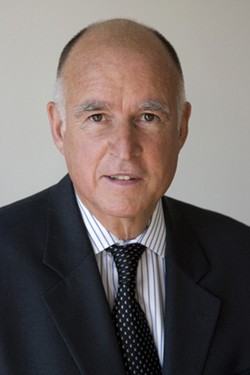
Photo: gov.ca.gov.com

Photo: gov.ca.gov.co

 
The Times reports that “… he court, one of the nation’s most influential, has no Latino or African American, or anyone from Southern California. Brown faces political pressure to change that. Judges and lawyers are betting Brown will pick a Latino. Some analysts said they would not be surprised if he elevated San Francisco appeals court Justice James Humes, an openly gay lawyer who served Brown in the governor’s office and when he was attorney general.”
 
Of course, adds another longtime observer of both the court and the governor notes, Brown adds the wild card of “doing whatever he feels like doing.” It will be interesting if any of the potential candidates dare to make courts funding an issue in taking the job. Read the Times story here.

Clients Need a ‘Bill of Rights’ argues CCM Publisher in HuffPo

California Courts Monitor publisher, Sara Warner, makes an argument for a “Client Bill of Rights” to protect clients in civil litigation today in the Huffington Post.

Sara Cocoran Warner, Founding Publisher of the California Courts Monitor

Sara Cocoran Warner, Founding Publisher of the California Courts Monitor

In her post, she states:

“We hear about personal injury cases being “bundled” with other cases to increase settlements, often without client knowledge. We hear that some attorneys distribute settlement money based on which client arrangements benefit them most. We hear about lawyers creating companies, like document courier services, that they use to drive up the “expenses” they can deduct from client payments…Hopefully, if true, these are rare events. A solid bill of rights might help keep them that way.”

Read the HuffPo piece here and join in the conversation.

Chief Justice Seeks Another $266m For Courts

Think what you will of California Chief Justice Tani Cantil-Sakauye, she is proving relentless at advocating for increased courts funding. A recent example came with an KABC Los Angeles Eyewitness News interview with Adrienne Alpert, who asked tough questions about court management and budget issues. 

Alpert notes that “… chief justices rarely agree to interviews, but Cantil-Sakauye is adamant the $105 million the governor added to the judicial budget is not nearly enough” then adds that “the chief justice says it will actually take $266 million to keep the courts running as they are and more than double that to fully serve the public.”

The interview is interesting, in part, because it refines the likely points as the state budget annual deadline moves into the two-month range. See video and text of the story here

Family Law Movie Still Making Fans

 
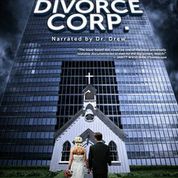
It has been out for a while now, but the family law documentary “Divorce Corp.” continues to gain fans, with its official trailer moving past 1 million views on YouTube and continued theater-venue screenings. The next one in the L.A. area, for example, is May 8 at 7 p.m. and hosted by “The Divorce Transition Professionals” at the Westlake Village Twin Theater.
Photo: www.divorcecorp.com

Photo: www.divorcecorp.com

 
The film takes a hard look at the family court in general through how it handles divorces, especially how children can become pawns in the proceedings. It is issue-specific, but shows some serious problems with L.A. family courts – the film makes the case that the system has become little more than a huge fee factory for lawyers and the courts.
 
Is it fair? Dan Schawbel at Huffington Post has a good interview with Dr. Drew Pinsky that largely answers that. Says Dr. Drew: “This is a system that doesn’t really serve anyone’s best interest except the system itself.”


Check out the trailer, the companion book and find local screenings here: www.divorcecorp.com.

Obama Picks Prosecutor For Fed Bench

 
High-profile U.S. Attorney André Birotte Jr. has been nominated for a federal judgeship in the L.A.-based Central District of California. He currently is head of a division that works on criminal, civil and tax cases. His nomination by President Obama follows a recommendation by U.S. Sen. Dianne Feinstein and faces confirmation by the senate.
 
Most recently, Birotte’s office led the investigations the brought indictments against California state Senator Ron Calderon on public corruption charges. The story is being reported by public radio station KPCC here
 
Follow the reporter, Sharon McNary: @KPCCsharon on Twitter

Court Interpreters Are Another Budget Issue

 
Who gets court-funded interpreters and how many are available are among issues being raised by a series of “working group” meetings focused on the pending state budget court-funding debate. While many judges say they may have enough to deal with Spanish-speaking cases, they note that more than 200 languages are spoken in California, according to a report by public radio station KPCC.
 
Another issue is which kinds of cases even get court-funded interpreters, notes the station, noting that “… while counties provide them for criminal cases, they generally don’t for things like child custody hearings and divorce proceedings. “We provide an interpreter for someone who ran a red light, but not someone who’s losing their children,” said one source.
 
The working group has already met in San Francisco. Next month, they’ll hold their final hearing in Sacramento before submitting the first draft of a language access improvement plan in June, reports Rina Palta, the station’s crime and safety reporter. Read and listen to the report here.


Follow the reporter on Twitter: @KPCCRina911 


City Watch Hits Flat-Fee Juvenile Defense Issue

 
The City Watch website is posting a story about the flat-fee juvenile defense system. At issue is how attorneys representing indigent youth are paid. The story by Gary Cohn is making the rounds as activists try to apply heat to officials who control the system.
 
Cohn writes that “… the problem is particularly serious in Los Angeles County, one of the world’s largest juvenile justice systems, where a controversial low-bid, flat fee compensation system for attorneys representing certain indigent youth raises systemic due process concerns. Under that system, contract attorneys — such as the one who represented Antonio, are paid an astonishingly low fee of $300 to $350 per case, regardless of whether the case involves shoplifting or murder. This is in a city where private lawyers are costly. Criminal defense attorney fees in Los Angeles can easily exceed $500 an hour.”
 
He also reports that the Los Angeles County Board of Supervisors on Feb. 11 voted unanimously to study the issue of panel attorneys’ compensation and other issues involving the county’s juvenile defense system. A series of recommendations is expected to be presented to the board this spring. 
 
Read the report, which also appears on publicCEO.com, here.

Class-Action Suit Seeks Judicial Back Pay

 
California judges are owed back pay and pension increases because their salaries did not keep pace with state worker compensation as required by law, according to a class action lawsuit filed by a recently retired judge. Robert Mallano, a former presiding judge of the 2nd District Court of Appeal, filed the lawsuit in Los Angeles Superior Court in January, according to the PublicCEO website.
 
At a meeting of state officials this month where the lawsuit was discussed, Alan Milligan, California’s chief actuary, said there is no formal estimate of the cost if the suit prevails. He said “most or all” of a $97 million liability gain, mainly due to lower salaries, likely would be lost. “How it plays out over time in the contribution rate, that’s a bit more difficult,” Milligan said. “I would have to do a bit of work to calculate that.”
 

You can read the report here.

N.C. Essay Notes CA Juvenile Justice

 
A Charlotte, NC, newspaper essay is citing a pair of California cases – one famous and historical, the other less famous and current – as examples why and how young African-American men have “skeptical” feelings about the justice system. Corey Arvin, writing in the Black Voice News and carried by The Charlotte Post, asserts that “today’s young African-Americans are not more skeptical of their value” in the justice system, they are just the latest to be aware of that disparity.
 
Arvin cites recent high-profile national cases like Trayvon Martin and the Michael Dunn “loud music” case, quoting University of California Professor Brenda Stevenson saying “… these aren’t just the opening of new wounds, it’s a combination of fresh and old wounds for African Americans.”
 
Stevenson is the author of a book about the killing of Latasha Harlins, a; 1991 case from South Los Angeles. She says such cases just continue the generational culture, noting that the Harlins case is among those recalled during events like the Martin trial.
 
In a state where the judicial system is choosing to close important community courthouses including facilities vital to juvenile justice, the essay should make your weekend reading list. Click here to read the essay. 

Civil Dept. Supervisor Seeks Asst. Presiding Post

 
The supervisor of the L.A. Superior Court civil department is a candidate for assistant presiding judge, becoming the first judge to declare for the fall election. After two years, that position would typically lead to an unopposed advancement to presiding judge. The candidacy is being reported in The Metropolitan News-Enterprise.
 
The MetNews website also published part of Daniel J. Buckley’s letter to other judges: “As the Supervising Judge of Civil during the consolidation of the past year, I have worked closely with…[Presiding Judge] Dave Wesley and [Assistant Presiding Judge] Carolyn Kuhl and have spent the great majority of my time in planning and implementing the changes we have undergone. There is still much to do as our court moves forward.”
According to the report, Buckley was appointed to the court in 2002 by then-Gov. Gray Davis and, at the time of his appointment, was managing partner in the law firm then known as Breidenbach, Buckley, Huchting & Hamblet, where he represented defendants in tort and environmental litigation. Read the MetNews coverage here.