Prisons Offer Lessons For Courts Rationing

There are lessons for civil justice advocates in the ongoing soap opera over California’s prison overcrowding. One is that the state can and will shift its responsibilities to counties, in this case moving inmates to county jails. Another is that the “miracle” of Gov. Brown’s “balanced budget” hinges on many such moves to effectively de-fund agencies. And yet another is that it may take years and years, but the chickens do come home to roost.
 
The news is that a U.S. Supreme Court decision pretty much gives the state a late December deadline for meeting the terms of a 2009 ruling by a  special three-judge panel. That panel said that the state’s 33 prisons were too overcrowded to provide prisoners adequate medical and mental health care. The governor has already met much of the court’s demand from what he calls a “realignment program,” which simply shifted low-level offenders from state prisons to county jails.
 
It’s unclear what, exactly, the state will do. But it’s worth noting that they have already shifted many “low-level” non-violent inmates to the counties. That means those left in prisons are those that did not make the cut for county jails. And yet another lesson for the civil courts, where cutbacks have also impacted the ability of the disabled to attain public services, that the state sometimes responds only when ordered to respond.
 
As usual, Howard Mintz (@hmintz)at the Mercury News newspaper makes a complex situation easy to understand. Read his article here. 
 
 
Follow CCM on Twitter @CACourtsMonitor
Another Newspaper Stands Up For Justice

“… but there is something particularly disturbing about a closed courtroom and what that says about how we govern and how we view access to justice” says the The Record newspaper of San Joaquin County in a new editorial. Along with its strong opinion, the paper also reports that the county’s local court will use an “additional” $1.5 million to re-hire some laid-off court staffers.
 
But, adds the newspaper, “… the additional money, however, is not enough to reopen shuttered courtrooms in Tracy and Lodi that were closed in April.” And the paper explains why the “additional” money is not really adding anything: “San Joaquin County Superior Court Executive Officer Rosa Junqueiro notes that lawmakers this year cut the courts by $261 million statewide, so adding back in $60 million still means California court funding is off by $201 million.”
 
Along with updating the local situation, The Record is reminding us that not all the mainstream media is ignoring the justice rationing issue. Read the editorial here.

Drop In Civil Cases Tracks With Budget Cuts

     
A new report showing a decline in civil cases is sure to fuel debate over cause and effect. Do reduced court hours, long lines, years-long waits for trials and increased fees reduce our tendency to seek justice, or are we just finally getting along better? The Judicial Council creates the state-mandated report annually, but this is the first one to be made public.
 
The Courthouse News Service, in a story by Maria Dinzeo, says we’ve seen a “steady decline in civil and lesser criminal filings over the last 10 years, coinciding with the decrease in funds for court operations and police departments, according to statistics presented to the state’s Judicial Council.” The CNS adds that “Judges on the council seemed concerned that the filing information published without analysis could be used against the courts, in a time when the judiciary is working to restore funding and educate lawmakers about court workloads.”
 
“You can see over this 10-year trend a steady increase in statewide filings up to almost an historic point above 10 million filings just before the budget cuts hit the branch. Then you see a decreasing trend over the last several years of ongoing cuts,” says a researcher with the Administrative Office of the Courts.
 
These are the kinds of numbers that will be used by both sides of the funding debates. Check out the CNS story here.

Golden State leads national trend of civil justice rationing

The CCM is adding selected national news stories on what amounts to the ongoing dismantling of the American civil justice system. While we remain focused on California civil justice rationing, it’s important to know that the Golden State is indeed leading a trend. To offer an overview, we will cite a “classic” story from the Economist that sets the stage.
 
The magazine reported more than a year ago that “… a report by the American Bar Association found that in the last three years, most states have cut court funding by around 10-15%. In the past two years, 26 have stopped filling judicial vacancies, 34 have stopped replacing clerks, 31 have frozen or cut the salaries of judges or staff, 16 have furloughed clerical staff, and nine have furloughed judges.”
 
It’s only gotten worse.
 
But the Economist offered more insight into what the civil cuts mean:
In Florida in 2009, according to the Washington Economics Group, the backlog in civil courts is costing the state some $9.8 billion in GDP a year, a staggering achievement for a court system that costs just $1.2 billion in its entirety. To make up the funding shortfall, courts are imposing higher filing fees on litigants. This threatens the idea of the equal right to justice, says Rebecca Love Kourlis of the Institute for the Advancement of the American Legal System.
 

Strong NBC Report Getting Some ‘Legs’ Online

Good news: The NBC San Francisco affiliate investigative report on the court backlog (see July 24 post below) is getting some increased attention online and the reporter, Stephen Stock, is continuing the conversation on Twitter. The Twitter conversation even includes some high-profile judges. 

Recent Tweets include “CA ct backlog: collection filings can take anywhere from 5 months to 32 months!!! depending on which court” and “court backlog DEFINITELY affects tenant/landlord disputes!

Stock and the “Bay Area Investigative Unit” took a look behind the usual reporting on numbers and “official voices” and reported on the stories of actual people. They highlighted a mother who has been waiting for her day in court for three years – over custody of her children. 

This is the first story we have re-noticed here, and if you check it out you’ll see why. See it here (and note that the written text leaves out some of the good parts from the video; they are slightly different).

After Layoffs, L.A. Courts Hiring Again – Judges That Is

After laying off more than 100 justice workers over the past month and eliminating hundreds more positions, the Los Angeles Superior Court has announced a half-dozen new hires for some $178,789-per-year jobs. Gov. Brown announced the appointment of six new judges last week, including two Superior Court commissioners, one former public defender and two prosecutors.
 
In one of the ironies of the justice rationing system, judges are protected in their jobs. Yet some have complained that they are actually not that effective due to staff cutbacks. Most judges begin their time on the bench after a governor’s appointment, and while they then face “election” most never face serious opposition.
 
The new judges are Loyd C. Loomis, Nicole C. Bershon, Beverly L. Bourne, Rupa S. Goswami, Curtis A. Kin and Teresa T. Sullivan. You can read more about them here.

Courthouse cutbacks create hardships for man with disabilities

By Sara Warner

 
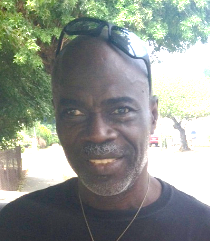
ORIGINAL REPORTING: CCM publisher Sara Warner profiles Mr. Femi Collins, a disabled engineer who has become one of the L.A. County citizens impacted directly by closing of local courthouses.
Mr. Femi Collins, a disabled engineer who has become one of the L.A. County citizens impacted directly by closing of local courthouses. (Photo by Sara Warner)

Mr. Femi Collins, a disabled engineer who has become one of the L.A. County citizens impacted directly by closing of local courthouses. (Photo by Sara Warner)


When you are blind, the difference between 4 miles and 27 miles in Los Angeles can be dramatic. Here is Mr. Collins’ story.
 
Femi Collins came to the United States from Nigeria in 1973. He was seeking a better life for himself, his future American wife, and his future nine children. To Mr. Collins the United States offered a future free of political instability and equality for all under the law.
 

After graduating with a BS and MS from Cal Poly Pomona University, Mr. Collins pursued a career in Engineering.  With an advancing career as an engineer and a growing, supportive family, Mr. Collins personified the “American Dream” – until a disability changed his life.

[Read more…]

Bay Area TV Report Hits Hard On Court Delays, Funding

The NBC affiliated TV station in San Francisco has broadcast a strong story about court delays due to ongoing budget cuts, including a court critic who notes that the judicial administrators are partly to blame for poor spending decsions. The “Bay Area Investigative Unit” found delays in every one of California’s 58 Superior Court systems and documented backlogs that included 30,000 documents stacked on one court’s floor awaiting proper filing.

Among the hard-hit are family courts, and the Investigative Unit reported the story of a Contra Costa County family court custody dispute for more than three years, leaving five and seven year old kids in legal limbo.

“I see my children,” the mother involved in the custody battle told the station. “They cry for me.”

Watch the report here. (Editor’s note: the print version on the website is a bit different from the video, which includes more details.)


Coastal Lawsuit Backup Shows 1,837-Case, 20-year Backlog

 
What happens when the Superior Courts civil dockets get really, really backed up? In effect, the rule of law is suspended; there’s a great example of that with the California Coastal Commission, which can’t actually levy fines but uses lawsuits to enforce regulations. But, in a must-read story, the San Jose Mercury News says the state agency now faces “… 1,837 backlogged cases, some dating back 20 years.”
The newspaper says that the cases “… range from wealthy Malibu residents putting up illegal “no parking” signs to block families from public beaches to a company suspected of illegally mining sand on Monterey County beaches to property owners dumping debris on the shoreline in rural Del Norte County.” And there’s a bill in Sacramento that would allow the commission to levy its own fines, like the Fish & Wildlife or air quality agencies. 
 
So you can take your pick: The new law would finally give the commission “some teeth” or it could bypass the civil justice system in favor of another fine-producing state board. But as other issues face the slowness of Superior Courts, you can bet this illustrates a trend away from having “your day in court.” Read the story here.

Gov’s Appointment of South Asian Woman Makes Superior Court History

It’s making the rounds that Gov. Jerry Brown’s July 12 appointment of a South Pasadena resident to the L.A. Superior Court made a bit of history. Rupa S. Goswami, 46, is the first South Asian American woman ever named to the California judiciary, according to multiple sources.
 
The new judge has worked at the U.S. Attorney’s Office in the Central District of California since 2001. She fills a vacancy created by the retirement of Judge Gary E. Daigh. While Superior Court judges are elected, most begin service via a governor’s appointment and few face serious political challenges after they are appointed.
 
There’s a good profile on the historic move at the India West news website: Read more here!