Private Church Camps Prepare To House ‘Border Kids’

 
The Dallas Morning News is reporting that “…. operators of two private camps in Ellis and Rockwall counties are scrambling to get ready for the arrival of at least 800 young immigrants from Central America, part of a recent surge crossing illegally into the U.S. from Mexico.”
 
Citing government sources, the paper says that about 300 immigrants — ages 12 to 18 — are expected to arrive at Sabine Creek Ranch next week for temporary shelter, and at least 500 children age 17 and under will stay at Lakeview Camp and Retreat Center near Waxahachie and could get there as early as Friday, officials in Ellis County said. At least one camp is run by a religious group.
 
Immigration detainment, especially of children, has been a controversial issue for months since an inflx of “Border Kids” began showing up on the U.S. border. Typically, they are not “caught” but turn themselves in and request asylum.  Read more here.
In L.A., Student Tickets Give Way To Counseling, Other Intervention

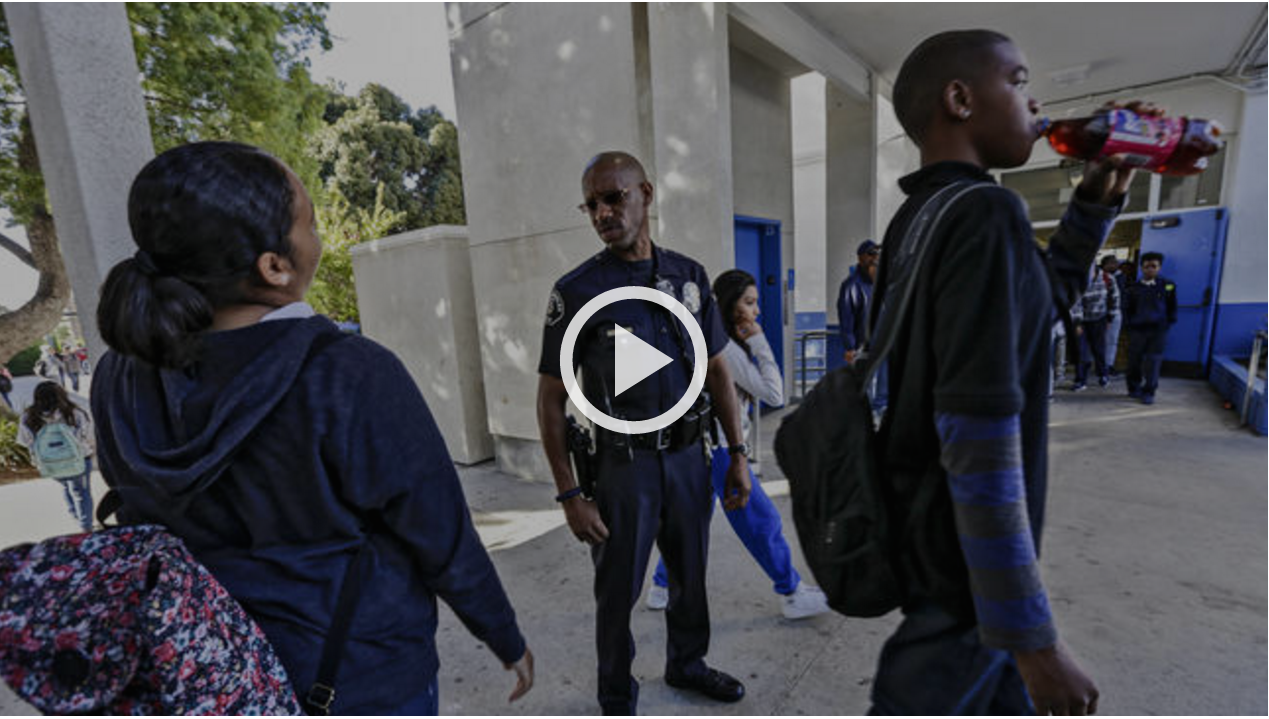
According to a 11/3/15 LA Times Report, "L.A. Unified sees success in counseling rather than arresting truants and kids who fight."

According to a 11/3/15 LA Times Report, “L.A. Unified sees success in counseling rather than arresting truants and kids who fight.”

The Los Angeles Times is following up on measures taken last year to reform an out-of-control truancy system. The shift actually began under pressure from civil rights groups and was approved back in 2012 when the LAT reported that: “Under the old policy, a student who received a truancy ticket had to appear in court with a parent. A judge would issue a fine and order the student to be on time for the next 60 days or face more legal trouble. Both the parent and student had to return two months later for a follow-up, causing the student to miss school time and the parent to lose wages.”

The update offered this background that the shift involves: “… 405 sworn L.A. Unified police officers who, along with more than 125 safety officers, make up the nation’s largest independent school police force. Across the nation, campus officers are facing criticism that they’re pushing children into a “school-to-prison pipeline” with citations, arrests and excessive force for issues that could be resolved by other means. National studies show that one arrest doubles a student’s odds of dropping out.”

The student truancy policies were also seen as a path to criminal records. While the initial “tickets” were treated as civil cases, failing to comply with the results, like paying fines or doing community work, led to criminal arrests.

Read the excellent Times coverage here.

Govt. Adding More Beds To Handle ‘Border Kids’

The new surge in unaccompanied children showing up at U.S. borders seeking asylum has prompted the federal government to move toward two new shelters, the New York Times is reporting. The paper says that the government is moving toward “two shelters in Texas and one in California this month, adding at least 1,400 beds to handle the increased flow, senior Obama administration officials said Monday.”
 
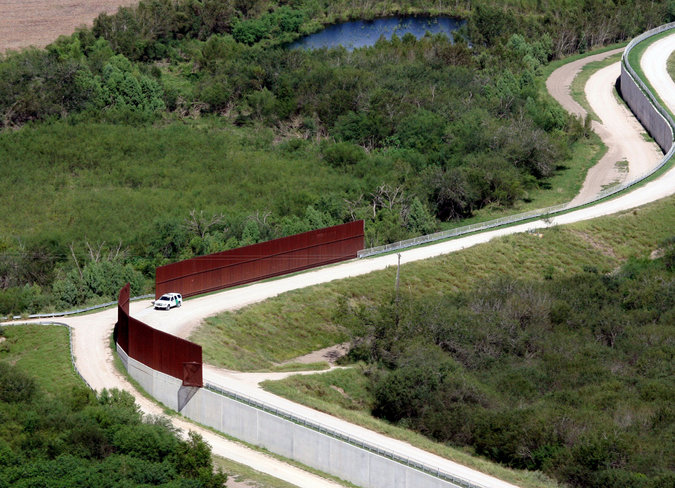
According to a 12/7/15 NYT report, "A United States Border Patrol vehicle at the border wall near Abram, Tex., last month. Credit Delcia Lopez/The Monitor, via Associated Press"

According to a 12/7/15 NYT report, “A United States Border Patrol vehicle at the border wall near Abram, Tex., last month. Credit Delcia Lopez/The Monitor, via Associated Press”

Family detention centers and the unaccompanied youth centers have been controversial and a federal judge has ordered the family shelters closed, although officials hope to work around that order. The Times also notes that “… on Monday, Sylvia Mathews Burwell, the secretary of health and human services, asked the Pentagon to also prepare tentative plans to provide shelter for 5,000 more youths. Those beds are not needed at this time, officials said, but the health department, which runs the shelters, would give the Department of Defense 30 days’ notice to get them ready if the numbers of young border crossers continue to rise.”
 
Immigration cases are often incorrectly seen as criminal court issues. The “courts” are actually a function of the U.S. Justice Department and those facing actions are classified as civil court participants. One effect of that is they do not have the same rights to counsel as if they were criminally charged.
 

WSJ Report Outlines Delays For Federal Civil Court Dockets

Detailing the case of a man awaiting his day in court since 2007, the Wall Street Journal notes that the example is only one of “… more than 330,000 such cases” and that “… thee number of cases awaiting resolution for three years or more exceeded 30,000 for the fifth time in the past decade.”
 
The report gives reasons, and makes the case that the civil justice system slows when the criminal justice system gets busy: “… the Seventh Amendment to the U.S. Constitution guarantees the right to a jury trial in civil cases. But the Sixth Amendment gives people in criminal cases the right to a “speedy” trial. The upshot: Criminal cases often displace and delay civil disputes, creating a backlog.”
 
It also says that “… federal court for California’s Eastern District [where the example case is located] has a particularly deep backlog. The number of cases filed per judge, 974 last year, is almost twice the national average. More than 14% of civil cases in that district have been pending for three years or more.” The report outlines the political challenges to fixing the tardy system. Read the WSJ story here: In Federal Courts, the Civil Cases Pile Up

Patent Cases Jump In Front of New Rules

Fortune Magazine is reporting a surge in patent cases, mostly in East Texas, as new rules that will “raise the bar” for what a patent owner must state in a lawsuit. The report says that “… while the new pleading standards are intended to make patent complaints more like other federal lawsuits, some complained that requiring specific facts for each lawsuit will make it more expensive for patent owners to assert their rights.”
 
The new record is 257 cases filed in a single day.
 

In-depth Analysis of Silver Conviction Implications

CCM publisher, Sara Warner, writes an in-depth analysis of the Sheldon Silver conviction implications in her latest Huffington Post blog. Take a look!

California Columnist: Lawsuit Likely If Parent-Trigger School Index Nixed

Since its passage in 2010, California’s “parent trigger” charter school movement has been the subject of litigation, perhaps most notably in the landmark “Palm Lane Elementary School” case in Anaheim. The “trigger” laws allow parents to demand reform at failing schools, including converting the school to a charter school. The California move triggered a handful of other states to take up similar provisions.
 
Now, says Sacramento Bee columnist Dan Walters, Golden State lawmakers are considering dropping one part of that parent trigger legislation, the so-called Academic Performance Index, or “API.” The standardized testing program was passed before the parent trigger, but was eventually linked to the controversial charter school efforts. Walters says removing the API will likely mean yet another lawsuit.


He writes that “… Gloria Romero, the former Democratic state senator who wrote the parent trigger law, says that if the API disappears, the Legislature should be duty-bound to provide a new performance measure for parents. However, the staff recommendation before the state school board is to eliminate the API and “identify the obsolete and outdated references to the API that need to be removed” as part of its repeal, implying that the parent trigger law should also die.”
 
If the API is repealed without a replacement measure for parent trigger, Romero tells Walters, a lawsuit would be the next step, which would not be unusual. He notes that “… school reform and civil rights groups have often sued, usually successfully, in their battles with the establishment over accountability and other flashpoint issues.”


Silver Trial Headed For Closing Arguments Monday

 
The federal criminal trial of former New York Assembly Speaker Sheldon Silver is expected to enter the closing arguments stage on Monday, with his defense team opting to call no witnesses. They did grab headlines with a motion asking the judge to dismiss the case – which is actually a routine step in such trials. While a criminal trial, the Silver case is being closely watched by the civil trial bar, in part because lots of the case rests on his referral arrangement with an asbestos litigation firm.
 
That firm has said that Silver was “of counsel” for many years but performed no legal work while receiving more than $3 million in referral fees. The government contends that the then-Speaker steered government contracts to a clinic that helped with the referrals.
 
See a good Wall Street Journal recap here:

U.S. Family Detention Centers: Still There, Still Debated

 
As events in Paris rivet the U.S. media on the massive immigration crisis in Europe, it’s worth noting that we still have
Photo from LA Times Report, 10/23/15, "Immigrant family detention centers are prison-like, critics say, despite order to improve"

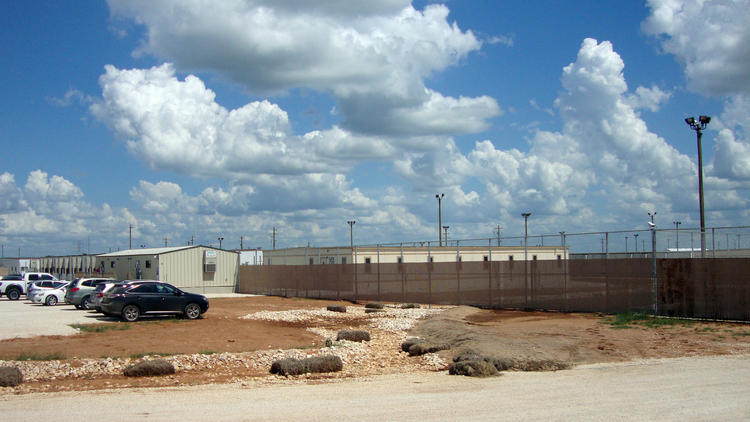
Photo from LA Times Report, 10/23/15, “Immigrant family detention centers are prison-like, critics say, despite order to improve”

 450,000 pending cases in the United States immigration court system and our “family detention” centers have been ruled illegal by a federal judge, who has ordered them closed. The federal government has responded by trying to license them through state agencies. 
 
The Los Angeles Times reminds us that “… this summer, U.S. District Judge Dolly Gee in Los Angeles castigated federal officials, finding they had failed to meet conditions for detaining immigrant children established by a 1997 court settlement, Flores vs. Meese. The judge prohibited the administration from holding children at centers not licensed to care for them and from holding families unless they posed a flight risk or a threat to national security…”
 
Find the rest of that story and related reporting about the situation here:

Florida Bar President Says Legal Representation Is A ‘Crisis’

 
The recent economic downturn and increased housing evictions are a couple of the reasons that Florida Bar President Ray Abadin says the inability of the majority of Floridians to afford legal representation is at “crisis proportions.” In a Tampa Tribune story, she says that “… not having professional legal representation can have dramatic adverse consequences in any situation. It can be devastating to one person; it can have life implications for families. Not having a lawyer can be a very serious thing.”
 
The Tribune notes that Abadin sits on the Florida Commission for Access to Civil Justice, “… which recently submitted its first report to the state Supreme Court offering suggestions for addressing the need, including a possible way to fund legal services.” Senior Judge Emerson R. Thompson Jr., the immediate past president of the state Bar Foundation, explains in the Trib’s report that “… the foundation’s main source of funds to pay for legal aid, interest on attorney trust accounts, sank from $22 million to $5 million. At the same time, thousands of Floridians faced foreclosure proceedings, threatened with losing their houses and needing legal representation.