Courts Monitor Publisher In The Huffington Post

Sara Cocoran Warner, Founding Publisher of the California Courts Monitor

Sara Cocoran Warner, Founding Publisher of the California Courts Monitor

A small Texas city seems an unlikely champion for upgraded standards for the tubing that brings fuel gas into 35 million homes. Or does it? National and California Courts Monitor Publisher Sara Warner has published a report about Lubbock, Texas and how a tragedy may lead to reform. Find it here:

Lubbock, Texas Poised To Lead In National ‘CSST’ Fuel-Gas Lightening Issue

Cutbacks Still Leave California Courts Needing Judges

The deep budget cuts to California Courts have not gone away, and a Courthouse News story illustrates how the judicial system is trying to re-allocate judges to lessen impacts. The CN explains a recent Judicial Council debate on how much leeway the group should have in shifting judgeship around the state, a controversial issue in part because of impacts on local elections – the Golden State elects its trial judges, but incumbents seldom face real competition.

The CN backgrounds that “California’s trial courts are suffering from a shortage of about 270 judges, Judicial Council lobbyist Cory Jasperson told the Policy Coordination and Liaison Committee… meeting by phone, the committee debated whether to move forward with legislative language that would grant the council discretion to dole out vacant judgeships.

The report notes that “… while Gov. Jerry Brown has already supported allocating up to five vacant judgeships in his 2016-17 budget, his proposal hardly begins to make a dent in the need. Pushing for additional legislation, either as a trailer bill to be included in this year’s budget or as a separate bill, would go much further.”

Keep up with the judicial rationing here:
http://www.courthousenews.com/2016/04/29/allocation-of-judgeships-becomes-hot-potato.htm

Conn. Takes Steps Toward ‘Civil Gideon’ Momentum

GavelFor some time, Connecticut Bar Association President William Clendenen Jr. has focused on the “justice gap” facing low and moderate income residents facing serious legal issues. So it’s no surprise that the state’s bar association, via its regular publication, is endorsing an effort by Democratic state Sen. Martin Looney to create a “Civil Gideon” task force, an important step if the state is ever going to address the issue.

Looney, who is the Senate president, has introduced a bill that would create a wide-ranging group to “… recommend the best ways to address the legal needs of the increasing number of people compelled to represent themselves when facing serious civil legal problems,” explains a piece in the Connecticut Law Tribune.

The CLT backgrounds that: “… [aid groups] are able to accept only a fraction of requests for assistance from eligible applicants. Those with modest incomes who do not qualify for free legal services are finding it increasingly difficult to afford market-rate legal fees. As a consequence, thousands of individuals and families face eviction and foreclosure notices, child custody proceedings, domestic violence hearings and other legal challenges involving basic human rights and interests without the support of legal advocates. Last year, nearly a quarter of all civil cases in Connecticut had one or more self-represented litigants. In family cases, the number rose to 85 percent.”

Eight of ten in family court. Wow! Read more here:

‘Civil Gideon’ Task Force Would Be an Important First Step

Public School Must Pay $3 Million For Denying Space To Charter

Los Angeles Unified School District students Alexandria Marek, 8, right, and Kerala Seth, 4, left, protested the district’s cuts to the high-profile Mandarin Immersion Program at Venice’s Broadway Elementary school in March. (Al Seib / Los Angeles Times)

Los Angeles Unified School District students Alexandria Marek, 8, right, and Kerala Seth, 4, left, protested the district’s cuts to the high-profile Mandarin Immersion Program at Venice’s Broadway Elementary school in March. (Al Seib / Los Angeles Times)

Los Angeles public schools have been ordered to pay $7.1 million to a San Fernando Valley charter school because the system failed to provide free classroom space, a violation of California law. As part of what amounts to one of the nation’s biggest charter school experiments, the Golden State requires public schools to help with charters, which are paid for with public funds but are managed independently. Litigation has been a byproduct.

The Los Angles Times reported that “… arbitrator John Zebrowski said that the district’s failure to comply with the law harmed children attending the charter during those [three] years because it forced the school to use some money intended for educational programs to lease a building. Zebrowski said students were further harmed because the building leased by the charter was inferior to what it would have received from L.A. Unified.”

Ivy Academia, with about 1,100 students, reportedly spent $3 million on rent and other costs from 2007-10, but the arbitrator said L.A. Unified should be on the hook for more money because he believed the property denied to the charter had a higher value. The LAT also noted that “the district must also pay the charter $650,000 in attorneys’ fees.”

Read the Times’ story here: Charter school awarded $7.1 million in case against LAUSD

Lawsuits, Legislation On Tap As California Charter Schools Keep Attracting Students

About one-fifth of students in the San Diego Unified School District have turned to charters such as College Preparatory Middle School, above. The district expects that figure to climb. (Misael Virgen / San Diego Union-Tribune)

About one-fifth of students in the San Diego Unified School District have turned to charters such as College Preparatory Middle School, above. The district expects that figure to climb. (Misael Virgen / San Diego Union-Tribune)

The Los Angeles Times has a detailed report from the front lines of the Golden State’s public charter schools battles, noting that “… twenty-five years after the California Charter School Act allowed public money to fund charter schools, which can be privately run and are often not unionized, advocates across the county and the state are waging legal and legislative fights. These disputes have led to tense relationships in districts that are scrambling to recoup the thousands of students who have sought alternatives.

Some numbers in the report: In the 2008-09 academic year, 38,680 students attended 73 charter schools in San Diego County. This year, 69,685 students are enrolled in 124 charters. But with growth comes questions.

San Diego County has emerged as a sort of Ground Zero for the California schools debate, although Los Angeles has its share of lawsuits as well.

Read the well-researched report here: Inside the fight against California’s charter schools

Justice Scalia Was Leader In Civil Justice Decisions

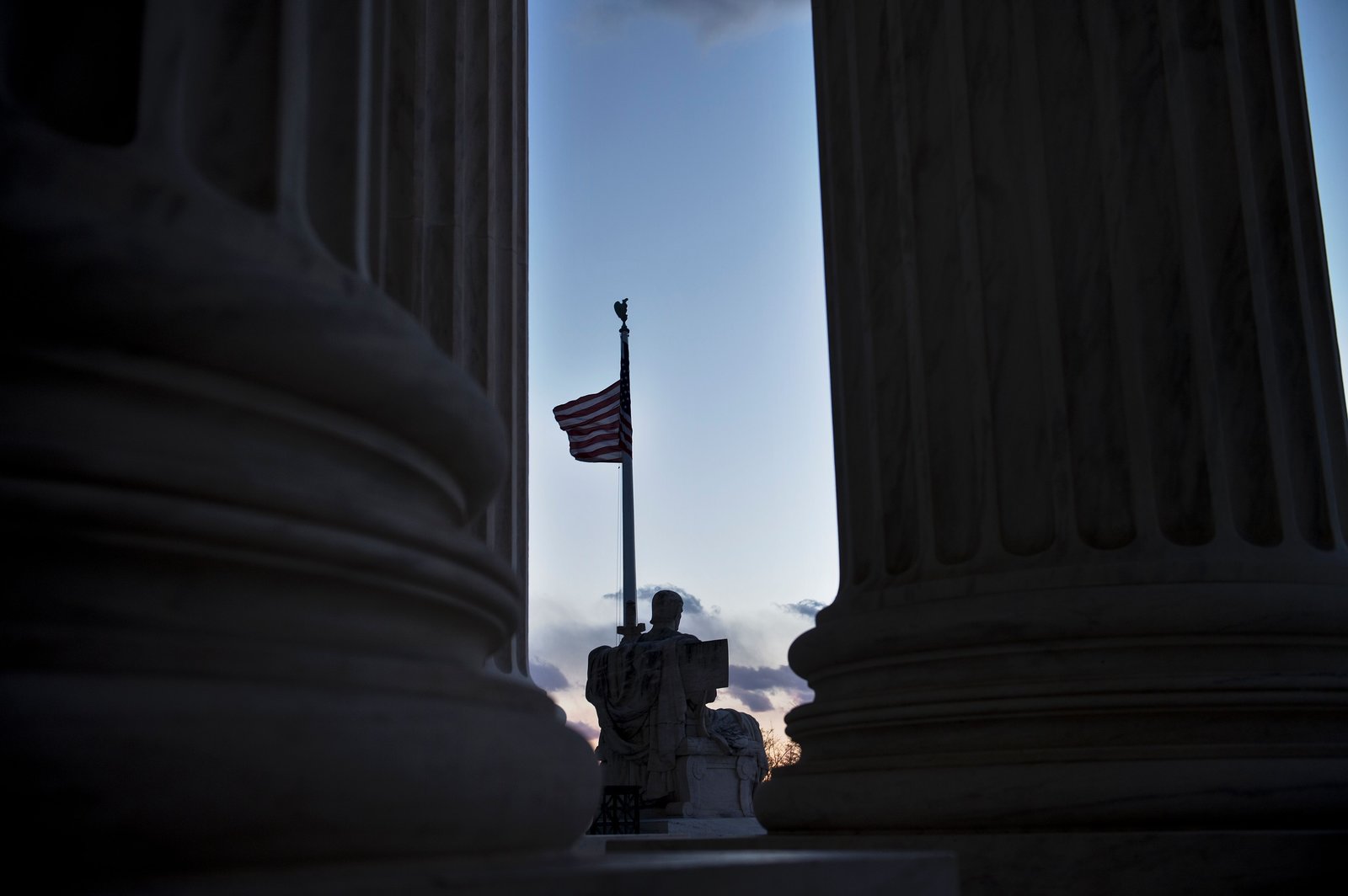
Photo Credit: The U.S. Supreme Court is seen on Saturday in Washington, DC, following the announcement of the death of Supreme Court Justice Antonin Scalia. NPR report, 2/15/16

Photo Credit: The U.S. Supreme Court is seen on Saturday in Washington, DC, following the announcement of the death of Supreme Court Justice Antonin Scalia.
NPR report, 2/15/16

The political and criminal-law fallout from the sudden death of U.S. Supreme Court Justice Antonin Scalia is, of course, being widely discussed as President Obama prepares to nominate a successor. But NPR has done a good job at detailing a half-dozen cases that really illustrate how much Justice Scalia sculpted the modern civil litigation landscape.

For example, remember the huge Wal-Mart lawsuit over treatment of female workers? NPR backgrounded the case: “The issue before the Supreme Court was whether female employees as a group could be certified as a single class, suing Wal-Mart at a single trial. Lawyers for the women introduced evidence showing that female employees held two-thirds of the lowest-level hourly jobs at Wal-Mart, but only one-third of the management jobs, and that women overall were paid on average $1.16 per hour less than men in the same jobs, though the women had more seniority and higher performance ratings.”

Scalia was widely noted as a reason Wal-Mart prevailed in its appeal to the high court. Other cases of illustration, like Hobby Lobby and Citizen’s United, can be found here: 6 Major Supreme Court Cases That Would Have Been Different Without Scalia

Legal Weed Still Brings Plenty Of Court Action

As criminal actions against marijuana users and growers diminish in “legal” states like Colorado and Washington and in more than 30 “medical marijuana” states like California, there has been a new crop of civil litigation. For example, in Riverside County, California the county is facing litigation over a new law that authorities said is a “crackdown the proliferation of large-scale, for-profit marijuana farms” in their communities.
 
Those operations are usually cooperatives, where many people will combine their rights to create a larger operation. More than a dozen lawsuits are underway to sort out regulatory questions. But medical pot providers say the civil actions amount to another way to shut them down. Read about that in The Riverside Enterprise newspaper.
 
Up in Washington state, a prosecutor in King County named Dan Satterberg argues that medical pot shops have been selling marijuana illegally for years and that will end soon after he serves lawsuits to 15 collectives in unincorporated parts of the county in the coming days. For years, the NW Cannabis Collective catered to its clients seeking medicine for pain and other conditions.
 
NW Cannabis CEO Michael Keysor said, “Most of these patients have been given up on by doctors. They have no answers for them.” This month, he received a letter from authorities telling him to shut down or be sued. He says a forced closure will kill his business for good. Again, the authorities are using civil leverage to advance their goals, and you can find Channel 13 TV coverage of that situation here.

Cutting-Edge Issues in Asbestos Litigation Conference

The Perrin Conference at the Beverly Wilshire Hotel ended yesterday (Tuesday, March 18). California asbestos judges from both Los Angeles and San Francisco participated. The CCM staff attended the conference and we will post an original summary of the conversations on later this week.