Immigration Judicial Complaints Remain Cloaked

A federal judge has ruled that identities of Immigration Court judges targeted by misconduct complaints can remain secret, including information like gender and even location of the court. The National Law Journal reports that “… the immigration office disclosed 16,000 pages associated with 767 complaints in the lawsuit, filed by the American Immigration Lawyers Association (AILA) in June 2013. The government released nonconfidential information from substantiated and unsubstantiated complaints. The names of individual judges were redacted.”
 
The government argued the public release of the judges’ names and other identifying information would infringe privacy interests. U.S. District Judge Christopher Cooper agreed, pointing out that the judges are career civil service employees and have privacy rights associated with that standing. That is a reference to Immigration Court judges not being “judges” in the typical sense, but are actually employees of the Justice Department.


Immigration Backlog Shows Need For More Lawyers

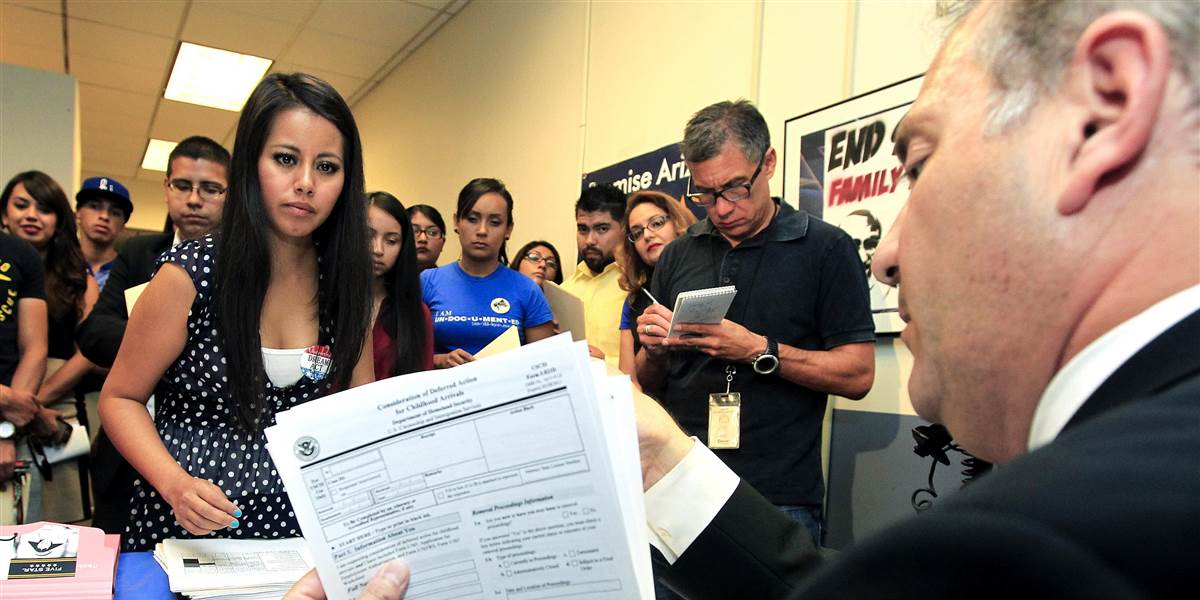
This photo was part of an NBC News report, "Demand Intensifies for Nonprofit Immigration Lawyers" discussing how the US immigration system is seriously lacking in how it represents the poor.

This photo was part of an NBC News report, “Demand Intensifies for Nonprofit Immigration Lawyers” discussing how the US immigration system is seriously lacking in how it represents the poor.


NBC News is among those taking a look back at 2014 and finding the country’s immigration system seriously lacking in how it represents the poor. Says NBC, “… the past summer’s flocking of children and families to the U.S.-Mexico border, the president’s impending executive action on immigration and the two-year-old Deferred Action for Childhood Arrivals, DACA, have intensified demand for immigration attorneys, particularly those who charge little to nothing. With each success, they amplify the difference good legal help can make in the lives of immigrants.”
 
NBC has this quote in it’s Storyline report: “We’ve long known that results in immigration court, in particular, vary widely depending on whether you have legal representation or not,” said Crystal Williams, American Immigration Lawyers Association, AILA, executive director. She adds that “… what we are seeing quite honestly, is the people who are getting asylum and are getting bonded out of (the immigration detention center in) Artesia, had the attorneys not been there, they would have been removed already.”
 

‘Border Kids’ Noted In AP’s Top 2014 Stories

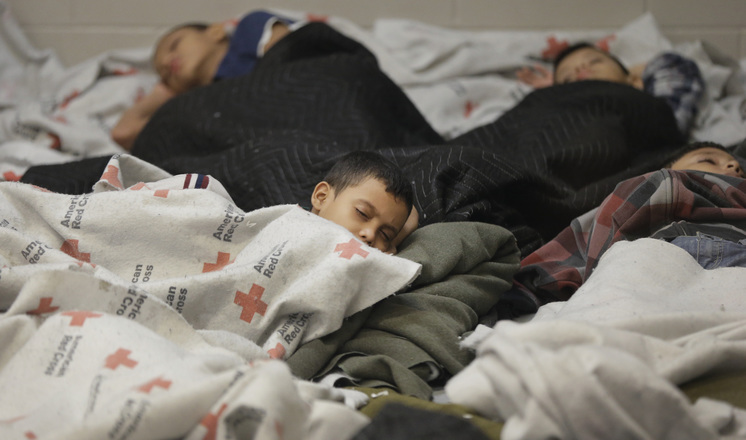
AP photo used in Tampa Bay Times report on 12/22/14 shows "Young detainees sleep in a holding cell on June 18, 2014, at a U.S. Customs and Border Protection processing facility in Brownsville,Texas."

AP photo used in Tampa Bay Times report on 12/22/14 shows “Young detainees sleep in a holding cell on June 18, 2014, at a U.S. Customs and Border Protection processing facility in Brownsville,Texas.”


The unaccompanied Central American minors seeking refuge in the United States was a key event as “immigration” was a Top 10 story in 2014, according to the Associated Press annual survey of U.S. editors and news directors. The wire service said “police killing of unarmed blacks” was the top story and the Ebola outbreak in West Africa was second.
 
On immigration, the AP says that “… frustrated by an impasse in Congress, President Obama took executive actions in November to curb deportations for many immigrants residing in the U.S. illegally. GOP leaders in the House and Senate pledged efforts to block the president’s moves. Prospects for reform legislation were dimmed earlier in the year by the influx of unaccompanied Central American minors arriving at the U.S. border, causing shelter overloads and case backlogs.” Immigration courts are civil justice proceedings managed by the Justice Department. Judges in the system have called for an overhaul, including making the courts independent of law enforcement.
 
See the AP story list for 2014 here, via the Tampa Bay Tribune.
 

A History Lesson On Race-Based Immigration

Controversy and court challenges over American birth-right citizenship for babies born in the U.S. to illegal immigrants? Targeting a particular group for enforcement because of their race? Accepting the labor and economic contribution while creating an immigrant underclass? An NBC news report outlines those moves against Chinese immigrants under the “Chinese Exclusion Act,” that was repealed in 1943 – after being in place for 61 years.
 
It was that debate over birth right to U.S. citizenship that brought the Supreme Court’s Wong Kim Ark case, which is still the legal standard today, notes NBC.
 
The Exclusion Act, says the report, “…. was repealed with the signing of the Magnuson Act on… Dec. 17, in 1943. The legal exclusion of Chinese lasted for sixty-one years. The repeal was named for Warren G. Magnuson, a member of Congress from Washington state, where some of the strongest anti-Chinese sentiment was heard. The repeal, however, was still restrictive, opening up Chinese immigration to just 105 visas.”
 
Read the NBC report and some details on the policy here: The Chinese Exclusion Act Ended Seventy-One Years Ago, Today
 

Immigration Courts Face Obama Actions

President Obama’s executive actions on immigration will impact the civil courts system, but it’s hard to know how soon that will happen – or how much the impact will be. Southern California public radio station KPCC is reporting it as “promising news” for immigration judges “… who have long sought more resources for their busy courtrooms, says Bruce Einhorn, a former immigration judge who served in the LA courts for more than 15 years.”:

As reported in SCPR, “A judge hears the cases of immigrant teens in Los Angeles.”

As reported in SCPR, “A judge hears the cases of immigrant teens in Los Angeles.”

The KPCC reports says  that a typical judge in Los Angeles has about 2,500 cases on their docket, which means an average case takes more than two years to reach a decision, but that could change with Obama’s action. Einhorn, said it will take time to see the effects on the ground. One group that will likely not find relief are the thousands of child migrant cases that are working their way through the courts. As Take Two has been covering on the program, more than 7,000 children are being heard in Los Angeles alone. Since they arrived in the country within the past five years, they probably will not qualify under the new rules from Obama.

Read and listen to the report here: Obama’s actions could affect thousands at LA’s immigration courts.

Tomorrow’s Immigration News Today: Devil In The Details

Not to equate the United States Justice Department with Lucifer himself, but the old saying that “the devil’s in the details” is holding up with President Obama’s immigration actions. You have to read with a particular eye, but a Washington Post report by  Juliet Eilperin and Jerry Markon notes that “… one of the provisions the Justice Department lawyers included, which they also pushed for during the creation of the 2012 program, was to make clear that federal immigration officials would still have the option of deporting individuals who might otherwise qualify for a deferral.”

Wait, what? With some 400,000 cases pending in the Justice Department’s own immigration courts, they also have the option of deporting people who would “otherwise” qualify for defferral? The WaPo also reports that the “… memo states that the new policy ‘provides for case-by-case determinations about whether an individual alien’s circumstances warrant the expenditure of removal resources, employing a broad standard that leaves ample room for the exercise of individual discretion by enforcement officials.’”

One point of the story is that some people who might qualify for protection under the Obama action will no self-identify to authorities. It’s the kind of uncertainty that has kept some “Dreamers” from stepping forward. From what we’ve seen in the past year, “trust the Justice Department” is going to be a tough sell, and a future headline will be “Few Take Obama Up On Protection Offer.”

You read it here first! And you can see the excellent WaPo work here.

Obama Does Congress’ Job on Immigration, is Immigration Court Reform Next?

Courts Monitor Publisher Sara Warner, writing at the Huffington Post “politics” page, notes that President Obama has stepped up to do Congress’ job on immigration; now, she wonders, will the president also address problems in his Justice Department’s immigration courts? With hundreds of thousands of cases pending and a federal investigation into nepotism, it would seem a good next step. Read it here.

N.M. Immigrant Detention Center Closing

The high-profile immigrant detention center in Artesia, N.M., is closing, the San Diego Union Tribune is reporting. The paper says that “… the government told some members of Congress about its plans Tuesday, and U.S. Immigration and Customs Enforcement later confirmed the closure to the AP. The administration indicated the facility was no longer needed because they are expanding jails elsewhere.”
 
The U-T adds that: “The Homeland Security Department opened the detention center at the Federal Law Enforcement Training Center in Artesia, New Mexico, in late June amid a crush of tens of thousands of Central American families caught crossing the border illegally. The facility had space to jail about 700 people facing deportation.”
 
Phillip Burch, the mayor of Artesia, said in the past six weeks 448 Central American mothers and children have been released from the detention center and 28 were deported. You can read the story here.

El Paso TV Station Makes Case For Immigration Reform

The ABC affiliate TV station in El Paso, Tx., KIVA, is making the case for immigration courts reform. In a multiple-part series, the station is outlining that “… the nearly 60,000 Central American migrants who came to the U.S. – many unaccompanied children – are going to the front of the line of the immigration courts – worsening the chronic backlog. Because the migrants mostly didn’t cross through El Paso though, Holguin said it’s not affecting the six El Paso immigration courts. 
 
But that’s not the problem in the El Paso region, says KVIA. Their problem is simply capacity. The stories outline the budget situation: “while the U.S. Border Patrol’s budget increased by 30% to $3.5 billion from 2009 to 2013, the immigration court system budget increased by 8% to $289 million in the same time frame. President Obama’s request this summer for $45 million, partly to hire more judges, was denied by Congress.”
 
The reports take a look at how long waits can put pressure on families and institutions. It can be found here: 

Obama Said To Be Planning Big Immigration Move

While early reports do not focus on the more than 300,000 recent Central American “border kids” awaiting deportation hearings, it does seem President Obama is making good on his immigration policy promises. The New York Times reports that “… part of Mr. Obama’s plan alone could affect as many as 3.3 million people who have been living in the United States illegally for at least five years, according to an analysis by the Migration Policy Institute, an immigration research organization in Washington. But the White House is also considering a stricter policy that would limit the benefits to people who have lived in the country for at least 10 years, or about 2.5 million people.”
 
The NYT added that “… extending protections to more undocumented immigrants who came to the United States as children, and to their parents, could affect an additional one million or more if they are included in the final plan that the president announces.” Immigration cases, thought by many to be criminal cases, are actually civil actions. For example, immigration “judges” are actually employees of the Justice Department.
 
But officials also said, according to the Times, that patrol agents and judges at the Department of Homeland Security, the Justice Department and other federal law enforcement and judicial agencies, “will make clear that deportations should still proceed for convicted criminals, foreigners who pose national security risks and recent border crossers.”