High Court Backs Homeowners In Mortgage-Recession Row

The U.S. Supreme Court came down on the side of homeowners Tuesday, ruling in favor of mortgage-takers trying to back out of their deals as they accuse banks of failing to follow federal “truth in lending laws.” Reuters explains that “… on a 9-0 vote, the court handed a win to an Eagan, Minnesota couple, Larry and Cheryle Jesinoski, over the $611,000 loan they obtained in 2007 from Countrywide Home Loans Inc, now part of Bank of America Corp.”
 
More broadly, the ruling underscores that federal law “… allows consumers to rescind a mortgage for up to three years after it was made if the lender does not notify them of various details about the loan including finance charges and interest rates.”
 
The move could have significant implications for mortgage industry process and for homeowners who feel they were not notified of specific mortgage terms. Read the story here: UPDATE 1-U.S. Supreme Court rules for homeowners over mortgage dispute
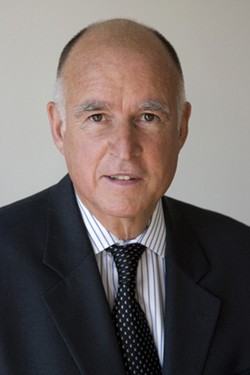
Gov. Adds Cash For Courts

Photo: gov.ca.gov.com

Gov. Jerry Brown – Photo: www.ca.gov


It seems Gov. Jerry Brown is increasing California judicial branch funding this year, not only moving closer to pre-recession levels but also singling our specific areas – like employee benefits – to illustrate where the money should go. The Mercury-News explains that “… the governor’s 2015-16 budget bumps the state court system’s budget from last year’s $3.29 billion to $3.47 billion, with most of that increase headed to the 58 trial courts around California hit hardest by past cutbacks. Courts in counties across the state, including Bay Area systems in Santa Clara, San Mateo, Alameda and Contra Costa counties, have been forced to reduce public hours, lay off employees and shutter remote courthouses as a result of prior cuts that at one point exceeded $1 billion over several years. Under the governor’s budget, the judiciary’s budget would inch closer to the $3.7 billion allocated in 2007-08. In fact, with the use of trial court reserve money required under previous budgets, the governor’s staff pegs spending on the judicial branch at about $3.7 billion in the 2015-16 fiscal year.
 
Read the story here.

Courts Monitor’s Top 5 Civil Justice Issues For 2015

The staff and publisher offer a rundown of five top civil justice issues to watch. See it at The Huffington Post.

Newsweek Notes ‘Civil Gideon’ In Eviction Issue

If 2015 is going to be the “Tipping Point” year for civil Gideon in the United States, then stories like a recent Newsweek report are going to play an important role. Writer Victoria Bekiempis calls the right to council in eviction proceedings “another civil rights movement… quietly gaining momentum.”
 
Some key points in her report: In New York City, some 90 percent of tenants in housing court don’t have attorneys while about 90 percent of landlords do; about one-third of persons in NYC homeless shelters arrive immediately after an eviction; some 30,000 families were evicted last year; each bed in a New York City homeless shelter costs $36,000 annually, experts say, while it would cost $1,600 to $3,200 to represent a client in housing court.
 
Bekiempis’ story is the sort of year-starter that gets picked up (like, say, we’re doing now) and includes important resources for anyone interested in how justice gets rationed. For civil Gideon fans, it’s already required reading, and you can find it here: Housing: The Other Civil Rights Movement.

Senator Seeks Cameras In Fed. Courts

U.S. Sen. Charles Grassley, poised to become Senate Judiciary Committee chairman, is already making increased court transparency a priority. The Des Moines Register reports that the senator “… is again encouraging the U.S. Supreme Court to add cameras in the courtroom.” His encouragement comes in the wake of U.S. Chief Justice John Roberts dedicating his year-end “state of the courts” report on technology, but without even mentioning cameras in the courtroom.
 
“In his year-end report, Chief Justice Roberts rightly promotes how the courts have embraced new technology,” Grassley is quoted as saying in the report from the Associated Press. “Unfortunately, though, the courts have yet to embrace the one technology that the founders would likely have advocated for — cameras in the courtroom. The founders intended for trials to be held in front of all people who wished to attend.”
 
The senator has introduced legislation to force the courts to allow cameras and says he will do so again. See the story here: Grassley: Put cameras in the Supreme Court


Immigration Judicial Complaints Remain Cloaked

A federal judge has ruled that identities of Immigration Court judges targeted by misconduct complaints can remain secret, including information like gender and even location of the court. The National Law Journal reports that “… the immigration office disclosed 16,000 pages associated with 767 complaints in the lawsuit, filed by the American Immigration Lawyers Association (AILA) in June 2013. The government released nonconfidential information from substantiated and unsubstantiated complaints. The names of individual judges were redacted.”
 
The government argued the public release of the judges’ names and other identifying information would infringe privacy interests. U.S. District Judge Christopher Cooper agreed, pointing out that the judges are career civil service employees and have privacy rights associated with that standing. That is a reference to Immigration Court judges not being “judges” in the typical sense, but are actually employees of the Justice Department.


Immigration Backlog Shows Need For More Lawyers

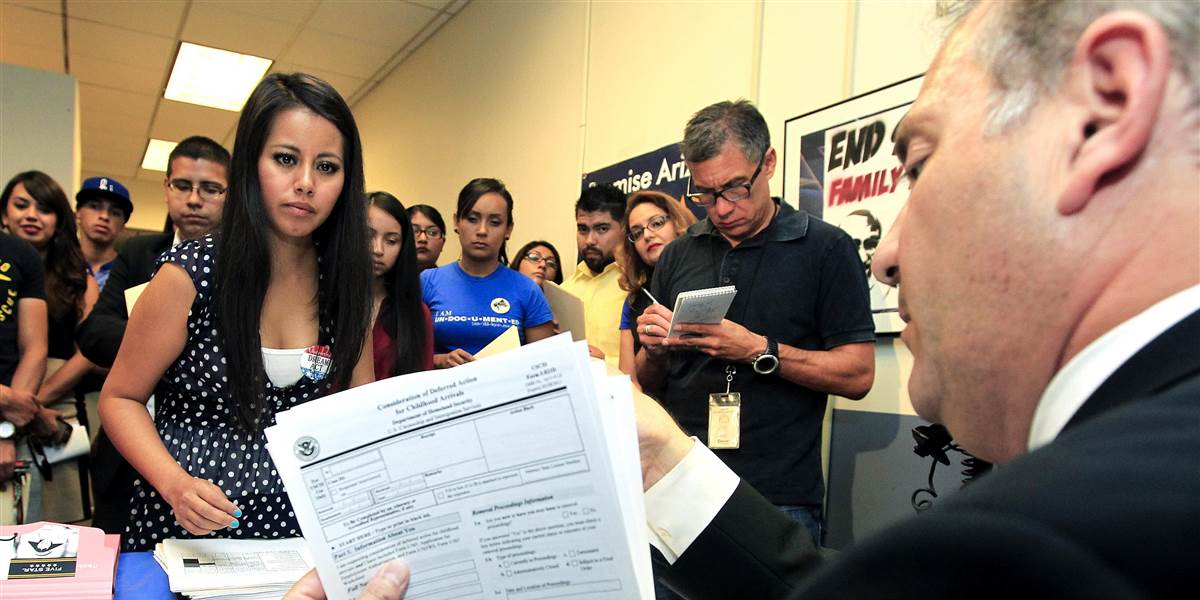
This photo was part of an NBC News report, "Demand Intensifies for Nonprofit Immigration Lawyers" discussing how the US immigration system is seriously lacking in how it represents the poor.

This photo was part of an NBC News report, “Demand Intensifies for Nonprofit Immigration Lawyers” discussing how the US immigration system is seriously lacking in how it represents the poor.


NBC News is among those taking a look back at 2014 and finding the country’s immigration system seriously lacking in how it represents the poor. Says NBC, “… the past summer’s flocking of children and families to the U.S.-Mexico border, the president’s impending executive action on immigration and the two-year-old Deferred Action for Childhood Arrivals, DACA, have intensified demand for immigration attorneys, particularly those who charge little to nothing. With each success, they amplify the difference good legal help can make in the lives of immigrants.”
 
NBC has this quote in it’s Storyline report: “We’ve long known that results in immigration court, in particular, vary widely depending on whether you have legal representation or not,” said Crystal Williams, American Immigration Lawyers Association, AILA, executive director. She adds that “… what we are seeing quite honestly, is the people who are getting asylum and are getting bonded out of (the immigration detention center in) Artesia, had the attorneys not been there, they would have been removed already.”
 

‘Border Kids’ Noted In AP’s Top 2014 Stories

AP photo used in Tampa Bay Times report on 12/22/14 shows "Young detainees sleep in a holding cell on June 18, 2014, at a U.S. Customs and Border Protection processing facility in Brownsville,Texas."

AP photo used in Tampa Bay Times report on 12/22/14 shows “Young detainees sleep in a holding cell on June 18, 2014, at a U.S. Customs and Border Protection processing facility in Brownsville,Texas.”


The unaccompanied Central American minors seeking refuge in the United States was a key event as “immigration” was a Top 10 story in 2014, according to the Associated Press annual survey of U.S. editors and news directors. The wire service said “police killing of unarmed blacks” was the top story and the Ebola outbreak in West Africa was second.
 
On immigration, the AP says that “… frustrated by an impasse in Congress, President Obama took executive actions in November to curb deportations for many immigrants residing in the U.S. illegally. GOP leaders in the House and Senate pledged efforts to block the president’s moves. Prospects for reform legislation were dimmed earlier in the year by the influx of unaccompanied Central American minors arriving at the U.S. border, causing shelter overloads and case backlogs.” Immigration courts are civil justice proceedings managed by the Justice Department. Judges in the system have called for an overhaul, including making the courts independent of law enforcement.
 
See the AP story list for 2014 here, via the Tampa Bay Tribune.
 

A History Lesson On Race-Based Immigration

Controversy and court challenges over American birth-right citizenship for babies born in the U.S. to illegal immigrants? Targeting a particular group for enforcement because of their race? Accepting the labor and economic contribution while creating an immigrant underclass? An NBC news report outlines those moves against Chinese immigrants under the “Chinese Exclusion Act,” that was repealed in 1943 – after being in place for 61 years.
 
It was that debate over birth right to U.S. citizenship that brought the Supreme Court’s Wong Kim Ark case, which is still the legal standard today, notes NBC.
 
The Exclusion Act, says the report, “…. was repealed with the signing of the Magnuson Act on… Dec. 17, in 1943. The legal exclusion of Chinese lasted for sixty-one years. The repeal was named for Warren G. Magnuson, a member of Congress from Washington state, where some of the strongest anti-Chinese sentiment was heard. The repeal, however, was still restrictive, opening up Chinese immigration to just 105 visas.”
 
Read the NBC report and some details on the policy here: The Chinese Exclusion Act Ended Seventy-One Years Ago, Today
 

S.F And L.A. Sue Uber Car Service

If district attorneys from two big cities think you or I are breaking the law, they send the cops. But if you are a company valued at $40 billion, they send the civil attorneys. The San Francisco Chronicle and other outlets are reporting that “… both San Francisco and Los Angeles district attorneys filed a consumer protection lawsuit against on-demand ride service Uber on Tuesday, saying it misleads customers about driver background checks and violates state laws about airport rides and calculating fares.”
 
The newspaper reports that Uber’s rival service Lyft settled similar allegations and agreed to pay up to $500,000 in civil fines.
 
“Uber refused to comply with straightforward Caifornia laws to protect consumers from harm,” San Francisco District Attorney George Gascón said at a news conference. “Companies can be innovative without harming consumers.”
 
Uber spokeswoman Eva Behrend had a different take: “Californians and California lawmakers all agree — Uber is an integral, safe, and established part of the transportation ecosystem in the Golden State…”